
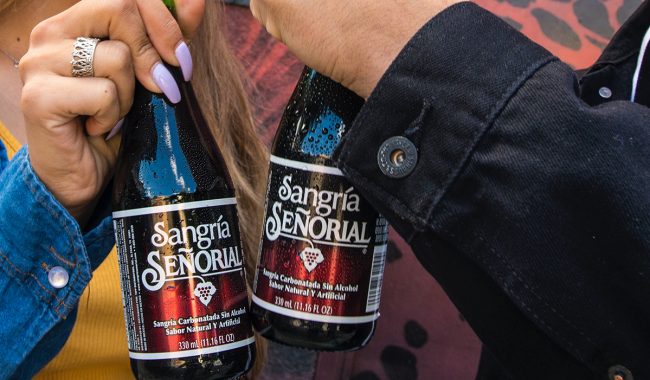
Is alcohol-free wine actually wine? This question continues to be the subject of numerous debates and controversies among consumers and EU lawmakers. Some researchers have even found that alcohol-free wine has significant health benefits.
In an article first published on The Conversation France, Insaf Khelladi, associate professor at EMLV, and head of the Business Group at the De Vinci Research Center explores the benefits and the limitations of non-alcoholic wine.
Will the world ever accept non-alcoholic wine?
Regulations also have an impact on legitimacy. The law in France, for example, states that wine is “a drink that results exclusively from the complete or partial alcoholic fermentation of fresh grapes (crushed or not) or from grape must”, with an alcohol content of more than 8.5%. Remove the alcohol, and the product will no longer legally be considered wine.
The problem of categorisation
Wine is far from the first product to face issues of categorisation in this way.
In Europe, the label “milk” is defined by regulations as “the produce of the milking of one or more cows”. In 2017, the European Court of Justice enforced this regulation by prohibiting the use of the words “milk” and “cheese” to refer to plant-based versions of these products, in response to claims from dairy producers that such labels would confuse consumers.
But when it comes to meat, the European Parliament decided in 2020 to authorise the use of meat-related words to describe plant-based foods. As such, the terms “veggie burgers”, “soy steaks” and “vegan sausages” can all be used in the European Union.
The exception is in France, where the law clearly stipulates that words used for food with animal origin cannot be used to designate products made using vegetable proteins.
Ongoing debate in Brussels
A growing number of wine producers, large and small, have now started to produce dealcoholised products, and they are demanding the right to use the term “wine” for these new beverages. The debate is currently raging in Brussels, where the European Commission is discussing the reform of the common agricultural policy and the harmonisation of community rules, including the reform of Article 180 on wines. Depending on how the negotiations go, we could soon apply the term “wine” to dealcoholised products, albeit in a strictly controlled and regulated fashion.
Applying a regulation that links these products to the world of wine, probably in the form of a subcategory, will allow consumers to better identify these beverages and understand their inherent benefits.
The acceptance of low or no-alcohol wine will also depend on serious communication efforts from wine producers and retailers about these products.
As professionals work more on the legitimacy issue, dealcoholised wine will become more widely known and consumed, thus reducing the psychological barriers linked to its uptake.
This could see the alcohol content of a wine become a decisive criterion in consumer decision-making and help overcome the issues many potential buyers currently have with identifying dealcoholised products as “wine”.
The main challenge, then, is improve the taste of wine that doesn’t contain alcohol. It is possible that, in the near future, advances in dealcoholisation techniques will reduce the difference between traditional and NoLo wines, as is already the case with beer and spirits. The future of these new products will depend on whether wine producers can truly succeed in reducing the taste gap.
A lire ensuite :
 Cryptocurrency Research Conference 2025: EMLV Highlights the Need for Interdisciplinary Research on Web3 and Digital Assets
 FNEGE Médias: Corporate Social Responsibility and Taxation, a Research by Safa Gaaya and Fathen Lakha
 Surajit Bag ranked among the Best Business and Management Scientists in France according to Research.com!
 Empowering Future Scholars: A Business School Success Story in Research and Mentorship